
1. What Is Shilajit? History, Origin & Formation
1.1 What Is Shilajit?
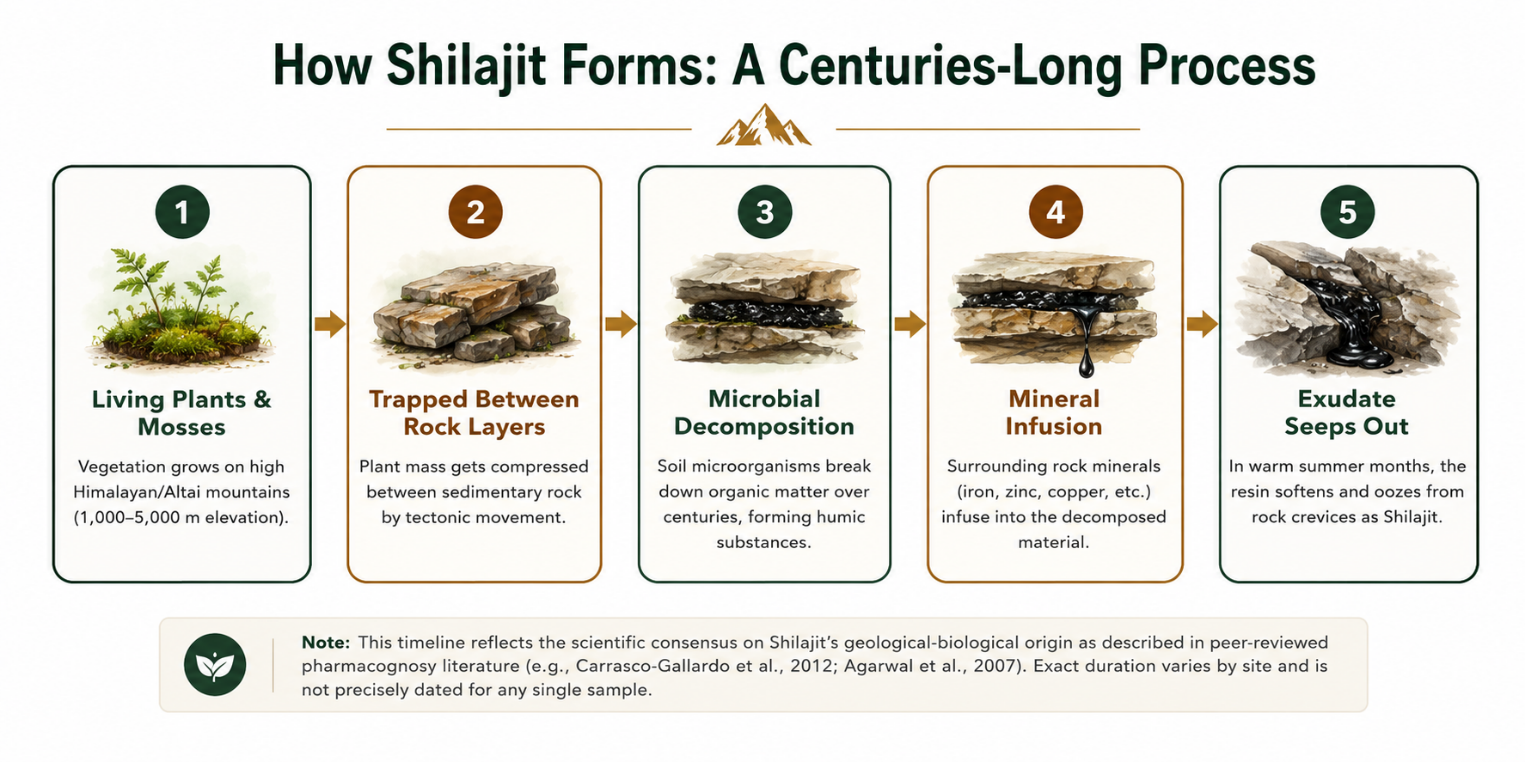
Shilajit (also spelled Shilajeet or Salajeet) is a thick, sticky, blackish-brown to dark-brown exudate that seeps out of rock crevices in high-altitude mountain ranges. It is not manufactured — it forms naturally over centuries through the slow microbial decomposition of plant material trapped between rock layers, combined with minerals leached from the surrounding geology.
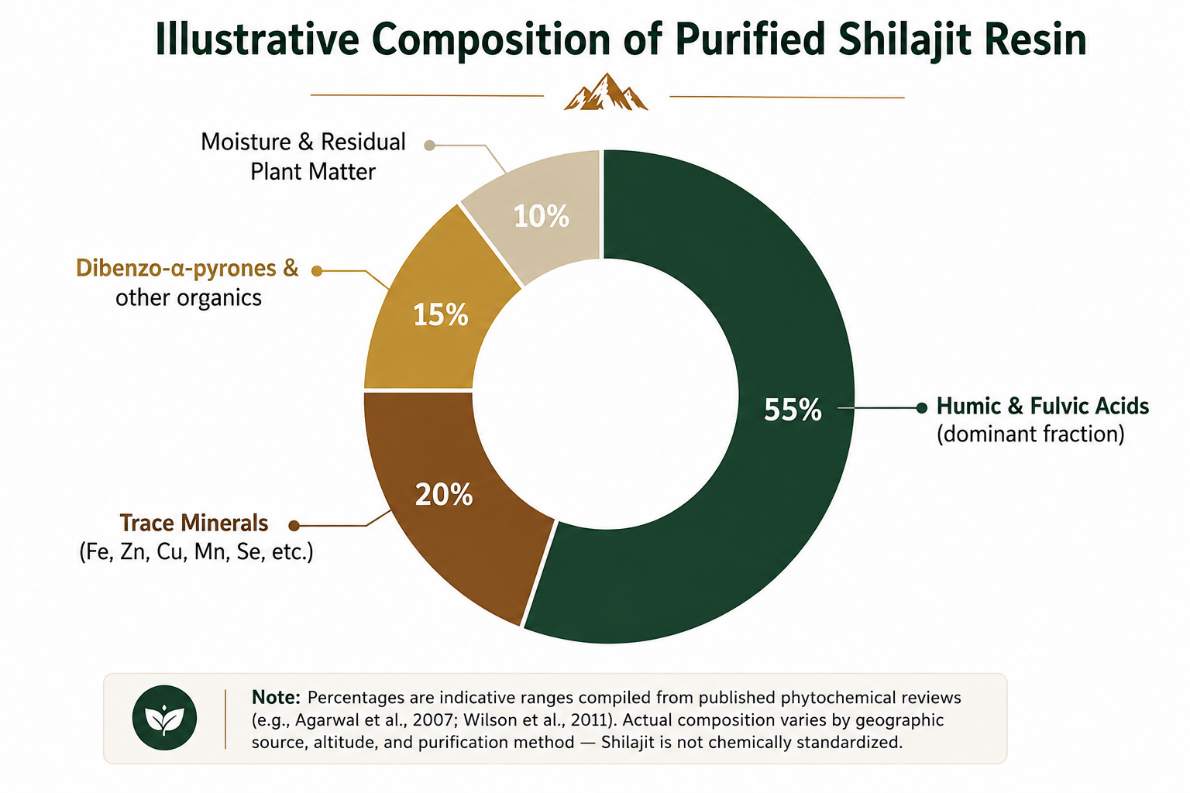
Scientifically, it is best described as a humic-substance phytocomplex, dominated by fulvic acid and humic acid along with dibenzo-α-pyrones, trace minerals, and amino acids. In classical Ayurveda, it holds a special place as one of the most important Rasayana (rejuvenative) substances, described in the Charaka Samhita and Sushruta Samhita.
1.2 A Brief History of Shilajit
Shilajit’s recorded history stretches across several independent traditional medicine systems, which is unusual for a substance restricted to specific mountain geographies:
- Ayurveda (India, Nepal): Referenced extensively in the Charaka Samhita (c. 1st–2nd century CE) and Sushruta Samhita (c. 6th century CE) as a leading Rasayana used to support strength, vitality, and healthy aging.
- Persian & Unani Medicine: Known as “Mumiyo” or “Moomiyo,” traditionally used to support bone and tissue recovery.
- Tibetan Medicine: Referred to as “Brag zhun” (rock juice/essence), used in traditional formulations for centuries.
- Russian & Central Asian Folk Medicine: Known as “Mumie,” traditionally regarded as a general tonic in Siberian and Altai communities.
Popular stories describing Shilajit’s discovery — such as villagers observing monkeys chewing the resin, or its use by historical figures like Alexander the Great — are part of oral/folk tradition repeated in modern marketing literature. These anecdotes are not verified by historical or peer-reviewed scholarship and should be read as cultural folklore rather than documented history.
1.3 Geological Origin: How Is Shilajit Formed?
Shilajit forms through a slow, multi-stage natural process rather than a single chemical reaction. Peer-reviewed pharmacognosy literature describes it as arising from the gradual decomposition of plant matter (proposed source species vary by region, including latex-bearing plants and mosses) that becomes trapped between layers of rock and is transformed by microbial activity and mineral infusion over long geological timescales.
1.4 Geography: Where Is Shilajit Found?
Shilajit is collected from specific high-altitude rock formations around the world. Composition and reported potency can vary meaningfully by region, since local plant biomass and rock mineralogy differ.
| Region | Countries / States | Typical Altitude |
|---|---|---|
| Himalayas | India (Himachal Pradesh, Uttarakhand, Jammu & Kashmir, Arunachal Pradesh), Nepal, Bhutan | 1,000 – 5,000 m |
| Karakoram & Hindu Kush | Pakistan, Afghanistan | 2,000 – 5,000 m |
| Altai Mountains | Russia, Kazakhstan, Mongolia, China | 1,500 – 4,000 m |
| Caucasus | Georgia, Armenia, Azerbaijan region | 1,500 – 4,000 m |
| Andes (“Andean Shilajit”) | Chile, Peru | 2,000 – 4,500 m |
Looking for lab-tested, purified Himalayan Shilajit?
🛒 View Vitakart ShilajitKey Takeaways
Shilajit is a naturally occurring humic-substance exudate, not a manufactured product or a true single-compound mineral. It has an unusually broad traditional-use history across Ayurveda, Unani, Tibetan, and Russian folk medicine, and forms over centuries in specific high-altitude rock formations across the Himalayas, Altai, Caucasus, and Andes.
Frequently Asked Questions
What exactly is Shilajit?
It is a natural, blackish-brown exudate that seeps from high-altitude rock crevices, formed over centuries from decomposed plant matter enriched with minerals from the surrounding rock. It is classified as a humic-substance phytocomplex.
Is Shilajit mentioned in ancient texts?
Yes. It appears prominently in the Charaka Samhita and Sushruta Samhita, two foundational classical Ayurvedic texts, where it is described as an important Rasayana (rejuvenative) substance.
Does all Shilajit come from the Himalayas?
No. While Himalayan Shilajit is the most well-known, similar humic-substance exudates are also collected from the Altai mountains, the Caucasus, and parts of the Andes, each with somewhat different mineral and organic profiles.
2. Types & Forms of Shilajit
2.1 Types of Shilajit by Geographic Origin
Because Shilajit is a natural exudate rather than a synthesized product, its composition is influenced strongly by where it is collected. Here is how the major regional types generally compare:
| Type | Source Region | Commonly Reported Notes |
|---|---|---|
| Himalayan Shilajit | India, Nepal, Bhutan | Most widely studied and traded form; basis for most published clinical research |
| Altai Shilajit | Russia / Central Asia | Traditionally used as “Mumie”; long folk-medicine history in the region |
| Caucasian Shilajit | Georgia / Armenia region | Less commercially widespread; limited independent research |
| Andean Shilajit | Chile, Peru | Reported by some laboratory studies to have distinct fulvic-acid profiles; comparatively newer to the global market |
2.2 Traditional Ayurvedic Grade Classification
Classical Rasashastra (Ayurvedic mineral pharmacology) texts describe Shilajit varieties named after metals, based on colour and reputed properties — this is a traditional classification system, not a modern chemical grading standard.
- Swarna Shilajit (“gold-type”) — reddish-brown, traditionally considered the most potent grade.
- Rajat Shilajit (“silver-type”) — whitish-grey, described in texts as milder.
- Tamra Shilajit (“copper-type”) — coppery-brown.
- Lauha Shilajit (“iron-type”) — blackish, most commonly available commercially today.
This four-grade metal-based classification comes from classical Rasashastra texts and traditional practice. It has not been validated through modern analytical chemistry as a reliable indicator of potency or safety, so it should be treated as historical classification rather than a modern quality benchmark.
2.3 Common Commercial Forms
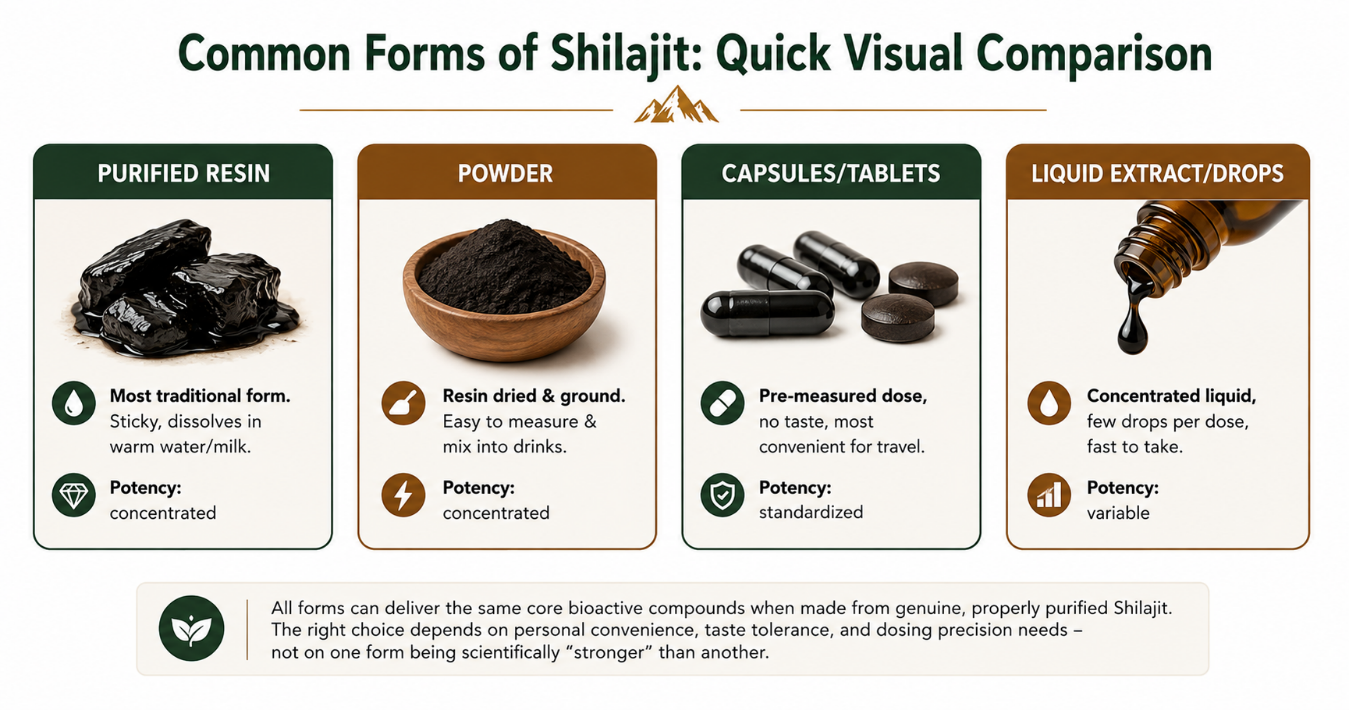
Modern Shilajit products are typically sold in one of four forms, each processed differently from the raw resin:
| Form | Pros | Considerations |
|---|---|---|
| Purified Resin | Closest to traditional form; easy to see purity via appearance/texture | Requires dissolving; taste is strongly bitter for some users |
| Powder | Easy to measure; mixes into drinks/smoothies | More processed; can be more prone to adulteration if unverified |
| Capsules / Tablets | Pre-measured, no taste, convenient for travel | Depends entirely on manufacturer’s quality control and fill accuracy |
| Liquid Extract / Drops | Fast to take; easy to dose small amounts | Concentration varies significantly between brands |
Prefer a convenient, purity-tested option?
🛒 Explore Vitakart ShilajitKey Takeaways
Shilajit varies by geographic origin (Himalayan, Altai, Caucasian, Andean) and is traditionally graded by classical Ayurvedic metal-based classification (gold/silver/copper/iron types), though this grading is not a modern scientific standard. Commercially, it is most often sold as resin, powder, capsules, or liquid extract — all can be effective when sourced from properly purified, lab-tested material.
Frequently Asked Questions
Which type of Shilajit is best?
There isn’t a single scientifically “best” type — Himalayan Shilajit has the most published research behind it, but quality depends far more on proper purification and lab-verified purity than on geographic origin alone.
What is the difference between resin and powder Shilajit?
Powder is typically dried and ground resin. Both can deliver similar bioactive compounds; the choice mainly comes down to convenience, taste tolerance, and dosing precision.
Are capsules as effective as raw resin?
Quality capsules made from properly standardized, purified Shilajit extract can deliver comparable bioactive content to resin, provided the manufacturer follows verified extraction and quality-testing standards.
3. Composition, Science & Clinical Studies
3.1 What’s Inside Shilajit?
Shilajit’s composition is complex and variable, but several components are consistently reported across peer-reviewed phytochemical studies:
| Component | Approx. Role Reported in Research |
|---|---|
| Fulvic acid | Small, water-soluble organic acid; proposed to act as a natural chelator, assisting mineral transport, with antioxidant activity noted in lab studies |
| Humic acid | Larger humic-substance molecule; contributes to Shilajit’s characteristic dark colour and organic matrix |
| Dibenzo-α-pyrones | Polyphenolic compounds studied for antioxidant and cell-protective activity in laboratory models |
| Trace minerals (Fe, Zn, Cu, Mn, Se, etc.) | Present in ionic/organic-bound form; contribute to overall nutrient profile |
| Amino acids & triterpenes | Minor organic constituents formed during long-term microbial decomposition |
3.2 What Modern Research Says
Scientific interest in Shilajit has grown over the past two decades, but human clinical evidence remains considerably smaller than the volume of preclinical (lab and animal) research. Below is a snapshot of some of the most-cited human studies:
| Study | Design & Population | Key Reported Finding |
|---|---|---|
| Pandit et al., 2016 (Andrologia) | RCT, 90 days, healthy men aged 45–55 | Significant increase in total testosterone, free testosterone, and DHEAS vs. placebo |
| Biswas et al., 2010 (Andrologia) | Clinical study, men with oligospermia | Reported improvement in sperm count and related semen parameters with processed Shilajit |
| Niranjan et al., 2016 | 12-week study, patients with type 2 diabetes | Reported improvements in endothelial function markers (hs-CRP, MDA, nitric oxide, glutathione) |
| Pingali et al., 2022 | 48-week RCT, postmenopausal women with osteopenia | Dose-dependent maintenance of bone mineral density vs. placebo over the study period |
| TruBlk Pilot Study, 2025 | 28-day open-label pilot, 25 healthy adults | Preliminary improvements in strength/endurance measures and blood biomarkers; small, non-placebo-controlled design |
| Carrasco-Gallardo et al., 2012 | Narrative review of preclinical data | Fulvic acid shown in lab studies to inhibit tau protein self-aggregation, of interest for cognitive-aging research |
3.3 Understanding the Evidence: What’s Established vs. Preliminary
- Preclinical only (cell/animal studies): antioxidant, anti-inflammatory, anti-mutagenic, and some anticancer-pathway activity — not yet confirmed in large human trials.
- Limited human evidence (small trials, need replication): testosterone and DHEAS support in middle-aged men; spermatogenesis support in oligospermia; bone density maintenance in postmenopausal women; markers of glycemic/endothelial health.
- Traditional use only (not clinically tested): broad Ayurvedic Rasayana claims, general “cure-all” statements, and most folk-medicine applications outside the specific studies above.
Many online sources describe Shilajit as effective for numerous conditions (arthritis, altitude sickness, chronic fatigue syndrome, hair loss, etc.) largely based on traditional use or anecdotal reports rather than rigorous clinical trials. These uses should be considered unproven from a modern scientific standpoint until supported by controlled human research.
Curious how a purified, standardized resin is made?
🛒 See Vitakart Shilajit DetailsKey Takeaways
Shilajit is chemically a humic-substance complex rich in fulvic acid, humic acid, dibenzo-alpha-pyrones and trace minerals. A handful of small human clinical trials support specific, narrow effects (testosterone/DHEAS, sperm parameters, bone density, some glycemic markers), while most other traditional claims remain in the preclinical or unverified category and need larger, better-controlled studies.
Frequently Asked Questions
Is there real scientific research on Shilajit, or is it just tradition?
Both. Shilajit has a long traditional-use history, and in the last 10–15 years a growing number of small human clinical trials and larger preclinical studies have investigated specific effects, though large-scale confirmatory trials are still limited.
Does Shilajit really increase testosterone?
One randomised, placebo-controlled 90-day study in men aged 45–55 found a significant increase in testosterone and DHEAS. This is a promising but single, relatively small study; more research is needed before it can be considered definitive for all populations.
Can Shilajit help with cognitive health or memory?
Laboratory studies suggest fulvic acid may inhibit tau protein aggregation, a mechanism of interest in aging-related cognitive research. However, this is preclinical (lab-based) evidence, not proof of a memory or cognition benefit in humans.
4. Benefits, Traditional Uses & Men’s / Women’s Health
4.1 Traditional Ayurvedic Uses
In classical Ayurveda, Shilajit is classified as a Rasayana (rejuvenator) and described as tridoshaghna — traditionally believed to help balance all three doshas (Vata, Pitta, Kapha). It has traditionally been used to support:
- General stamina, strength, and recovery from fatigue
- Vajikarana (reproductive vitality) formulations for both men and women
- Healthy aging and tissue nourishment (dhatu poshana)
- Recovery support alongside other herbs in classical formulations
The Charaka Samhita poetically states that there is virtually no curable condition that Shilajit cannot help address when used correctly, in combination with suitable herbs, and under proper guidance. This is a classical textual position from an ancient medical system, not a modern clinical claim, and should not be interpreted as a guarantee of therapeutic effect for any specific condition today.
4.2 Potential Benefits: What Preliminary Research Suggests
- Energy & reduced fatigue perception — supported by small studies on fulvic acid’s role in mitochondrial (ATP) energy production; evidence is still limited.
- Testosterone & DHEAS support in men — supported by one placebo-controlled clinical trial (see Section 3).
- Bone mineral density maintenance in postmenopausal women — supported by one 48-week RCT; needs replication in larger, independent trials.
- Antioxidant activity — well-supported in laboratory/cell studies; translation to measurable human health outcomes needs more research.
- Markers of metabolic/endothelial health — early evidence in a 12-week study in people with type 2 diabetes; not a substitute for prescribed diabetes management.
4.3 Men’s Health
Most human clinical research on Shilajit to date has focused on men, particularly around hormonal and reproductive health markers:
- Testosterone & DHEAS: A 2016 randomised, double-blind, placebo-controlled study found significant increases in total testosterone, free testosterone, and DHEAS after 90 days of purified Shilajit at 250 mg twice daily, with gonadotropic hormones (LH, FSH) remaining stable.
- Spermatogenic activity: A separate clinical study in men with oligospermia (low sperm count) reported improvements in sperm count and related semen parameters following supplementation with processed Shilajit.
- Physical performance & recovery: Small pilot studies have explored effects on muscle strength, endurance, and fatigue-related biomarkers, generally over 4–8 week periods, with encouraging but preliminary results.
Widespread marketing claims that Shilajit works like a natural alternative to testosterone replacement therapy, or dramatically boosts libido and “performance,” go well beyond what the existing small clinical studies actually measured. Men with diagnosed hormonal or fertility conditions should be evaluated and treated by a qualified physician rather than relying on supplements alone.
4.4 Women’s Health
Research specific to women is comparatively newer and smaller in volume, but a few relevant findings exist:
- Bone density: The most direct clinical evidence for women comes from a 48-week randomised, placebo-controlled trial in postmenopausal women with osteopenia, which found a dose-dependent effect on maintaining bone mineral density at the lumbar spine and femoral neck versus a steady decline in the placebo group.
- Iron & general mineral content: Shilajit naturally contains iron along with other trace minerals, which has led to traditional interest in its use for women with heavier menstrual blood loss — however, it should not be used as a substitute for medically diagnosed and monitored anemia treatment.
- Hormonal balance & menstrual regularity: These uses are widely discussed in wellness content but are currently supported mainly by small or preliminary studies and traditional use rather than large confirmatory trials.
Claims that Shilajit directly “balances estrogen and progesterone,” treats PCOS, or resolves infertility in women are not yet established by robust, peer-reviewed clinical evidence. Women trying to conceive, managing PCOS, or experiencing hormonal symptoms should consult a gynaecologist or qualified healthcare provider rather than self-treating with supplements.
Ready to add purified Shilajit to your wellness routine?
🛒 Order Vitakart ShilajitKey Takeaways
Traditional Ayurveda credits Shilajit with broad rejuvenating properties, but modern human research currently supports a narrower set of effects: testosterone/DHEAS and sperm-parameter support in men, and bone-density maintenance in postmenopausal women, alongside general antioxidant and metabolic-marker findings in early studies. Broader claims for hormonal balance, fertility, and disease treatment in both sexes remain unproven and should not replace medical care.
Frequently Asked Questions
Is Shilajit only beneficial for men?
No — while most existing clinical trials have focused on men (especially testosterone-related outcomes), there is emerging clinical research in women, notably a large randomised trial on bone density in postmenopausal women.
Can Shilajit help with female hormonal imbalance?
Some small studies and traditional use suggest supportive effects, but robust clinical evidence specific to conditions like PCOS or menopause-related hormonal symptoms is still limited. It should be used alongside, not instead of, medical guidance.
Is Shilajit a substitute for testosterone therapy or fertility treatment?
No. Clinical studies show statistically significant hormonal changes in specific study populations, but Shilajit is a dietary supplement, not an approved medical treatment for hypogonadism or infertility. Diagnosed conditions should be managed by a qualified physician.
5. How to Use Shilajit: Dosage, Timing & Method
5.1 General Dosage Guidance
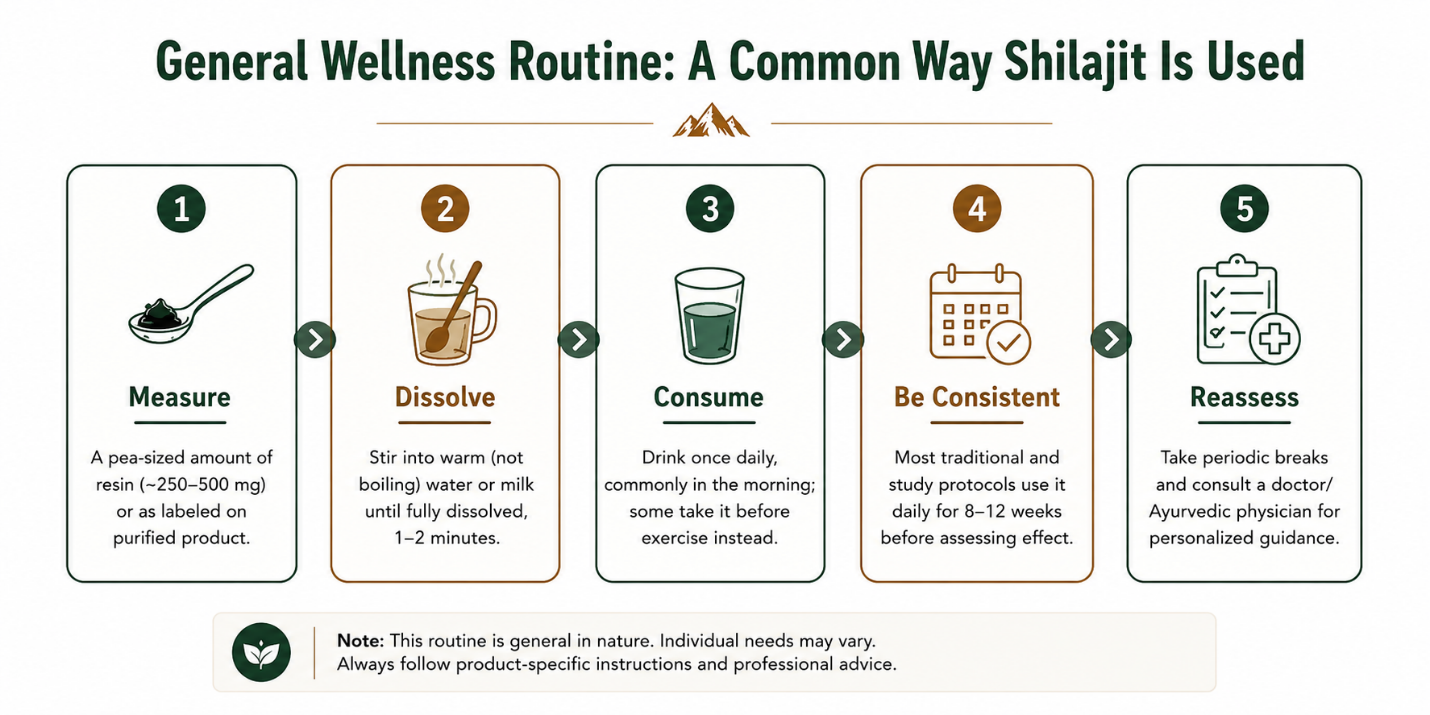
There is no single globally standardized medical dose for Shilajit, since it is regulated as a dietary/nutraceutical supplement rather than a prescription drug. Most traditional practice and published human studies have used amounts in the following general range — always follow the specific product’s label directions, as concentration and purity vary by brand:
| Form | Commonly Referenced Amount | Typical Frequency |
|---|---|---|
| Purified resin | Pea-to-rice-sized portion (approx. 250–500 mg) | Once or twice daily |
| Powder | About 1/4 teaspoon (approx. 250–300 mg) | Once daily |
| Capsules/tablets | As specified on product label (often 250–500 mg per serving) | Once or twice daily, per label |
| Liquid extract/drops | A few drops as specified by manufacturer | Once daily, per label |
5.2 Best Time to Take Shilajit
Traditional Ayurvedic practice and most modern guides commonly recommend taking Shilajit in the morning, though views differ on whether an empty stomach is ideal:
- Morning, empty stomach: The most commonly cited traditional approach, believed to support absorption and provide a steady energy lift through the day.
- Morning or pre-workout, after a small meal: Recommended by some modern practitioners for those prone to stomach sensitivity, as taking potent resin on a fully empty stomach can occasionally cause mild digestive discomfort.
- Evening, with warm milk: Sometimes used in traditional practice for recovery-focused routines, though some people find it too energizing before bed.
Because individual tolerance varies, starting with a smaller amount and observing how your body responds is a reasonable, cautious approach — and checking with an Ayurvedic physician or doctor is recommended if you are new to the supplement or manage a health condition.
5.3 Cycling & Duration
Published human studies on Shilajit have generally used continuous daily dosing over periods of 8 to 48 weeks depending on the outcome studied. Many traditional and commercial sources suggest taking it for 6–12 weeks and then reassessing, though there isn’t a single scientifically mandated cycling protocol — this is general wellness practice rather than a clinical guideline.
5.4 Who Should Check With a Doctor Before Starting
- Pregnant or breastfeeding women
- People with iron-overload conditions (e.g., hemochromatosis) or blood disorders like thalassemia or sickle cell disease
- People with autoimmune conditions (due to Shilajit’s studied immunomodulatory activity)
- People with kidney disease or on dialysis
- Anyone on prescription medication for blood pressure, diabetes, or blood thinning
- Children and adolescents
Want a pre-measured, easy-to-dose Shilajit option?
🛒 Check Vitakart ShilajitKey Takeaways
Most human studies and traditional practice use roughly 250–500 mg of purified Shilajit once or twice daily, commonly in the morning, dissolved in warm water or milk. There’s no universally mandated protocol for timing or cycling — start conservatively, follow the product label, and consult a doctor if you have any underlying health condition or take regular medication.
Frequently Asked Questions
How much Shilajit should I take per day?
Most traditional practice and clinical studies use roughly 250–500 mg of purified resin daily, often split into two doses. Always follow the specific dosing instructions on your product’s label, since potency varies by brand and purification method.
Should I take Shilajit on an empty stomach?
Many traditional sources recommend an empty stomach for absorption, but this can cause mild digestive discomfort in some people. Taking it after a small meal is a reasonable alternative if you experience sensitivity.
How long does it take to notice effects?
Reported timelines vary; some people notice subjective energy changes within days, while measured effects in clinical studies (such as testosterone or bone density changes) were assessed after 8–48 weeks of consistent daily use.
6. Quality, Purity & Home Tests
6.1 What Determines Shilajit Quality?
- Source & geography: Region of collection affects the natural mineral and fulvic-acid profile.
- Purification (Shodhana): Classical Ayurvedic processing removes physical impurities like soil, sand, and organic debris from the raw resin.
- Modern refinement: Techniques such as filtration, low-heat concentration, and (in some products) ultrafiltration aim to further reduce microbial and heavy-metal contamination.
- Independent lab verification: Third-party testing for fulvic-acid content (via HPLC) and heavy metals (via ICP-MS) is the only reliable way to confirm both potency and safety — appearance and home tests alone cannot fully verify this.
6.2 Regulatory & Quality Standards in India
Ayurvedic Shilajit medicines fall under India’s Ministry of AYUSH, and the Ayurvedic Pharmacopoeia of India defines Shilajit as an official Rasayana dravya with specified purification (shodhana) methods and quality parameters. Retail food-supplement labeling and general safety compliance are additionally overseen by the Food Safety and Standards Authority of India (FSSAI). Globally, Shilajit is generally regulated as a dietary supplement (for example under the U.S. DSHEA framework), meaning it is not pre-approved by regulators as a drug and is monitored mainly through post-market surveillance.
6.3 Home Purity Tests: What They Can (and Can’t) Tell You
Several simple at-home tests are widely shared online to help spot obviously fake or heavily adulterated Shilajit. These can be useful first checks, but none of them can confirm true purity, heavy-metal safety, or fulvic-acid content on their own — only accredited laboratory testing can do that.
| Home Test | How It’s Done | Key Limitation |
|---|---|---|
| Water solubility test | Drop a small piece in warm water and watch if it fully dissolves without residue | Some non-Shilajit substances (e.g., processed lignite/Leonardite) can also dissolve similarly |
| Flame test | Hold a small piece over a flame; genuine resin softens/bubbles rather than igniting like plastic | Cannot detect heavy metals or confirm bioactive compound content; only screens out crude petroleum-based fakes |
| Temperature pliability test | Chilled resin should harden; warmed resin (in the hand) should soften and become sticky | A texture indicator only — does not confirm chemical purity |
| Alcohol insolubility test | Genuine resin should not fully dissolve in strong alcohol, unlike some synthetic additives | Not a definitive test on its own; best used alongside other checks |
Home tests such as the flame test, water test, and alcohol test are informal, traditional heuristics popularized in consumer and marketing content. They can help flag obviously fake products but have not been validated as scientifically reliable purity assays. They should never be treated as a substitute for a certified laboratory report.
6.4 Red Flags Checklist
- No batch-specific lab report for heavy metals (lead, arsenic, mercury, cadmium) or fulvic-acid content
- Marketing that emphasizes “100% raw and unprocessed” as a selling point (raw, unpurified Shilajit carries a higher contamination risk)
- Unrealistically low pricing compared to typical purified-resin market rates
- Vague or missing information about geographic source and purification method
- No visible manufacturer/FSSAI license details on Indian-market products
Look for lab-tested purity you can verify
🛒 View Vitakart Shilajit Quality DetailsKey Takeaways
Quality Shilajit depends on source, proper purification (shodhana or modern equivalent), and — most importantly — independent laboratory verification of fulvic-acid content and heavy-metal safety. Home tests like the water-solubility or flame test can help catch obvious fakes but cannot confirm true purity or safety on their own.
Frequently Asked Questions
Can I rely on the flame test to confirm Shilajit is genuine?
The flame test can help rule out crude, obviously fake products (like plain petroleum-based imitations), but it cannot detect heavy metals or confirm actual bioactive content. A lab certificate is the only reliable confirmation.
What should a genuine lab report show?
Look for fulvic-acid content (commonly tested via HPLC) and heavy-metal levels (lead, arsenic, mercury, cadmium) tested via ICP-MS or equivalent, ideally from an independent, accredited laboratory, tied to the specific batch you purchased.
Is raw, unprocessed Shilajit safer than purified Shilajit?
No — raw Shilajit collected directly from rock can contain soil, microbial contaminants, and absorbed heavy metals. Proper purification (traditional shodhana or validated modern filtration) is a safety step, not a downgrade.
7. Myths vs. Facts & Safety
7.1 Myths vs. Facts
| Myth | Fact |
|---|---|
| Shilajit is a cure-all for every disease. | It is traditionally described this way in classical texts, but modern regulators (FDA, WHO, FSSAI/AYUSH) have not approved it to treat, cure, or prevent any specific disease. |
| More fulvic acid percentage always means a better product. | Fulvic-acid percentage is one quality marker, but extraction method, source purity, and independent heavy-metal testing matter just as much, if not more. |
| If it catches fire, it’s more “potent.” | Genuine Shilajit does not ignite like a flame; catching fire or producing acrid smoke usually signals contamination with flammable fillers, not higher potency. |
| Raw, unrefined Shilajit is the most “natural” and best choice. | Raw resin collected straight from rock can carry unsafe levels of heavy metals and microbial contaminants; purification is a safety necessity, not a compromise. |
| Shilajit works like a pharmaceutical testosterone booster. | A placebo-controlled study found statistically significant hormonal changes in a specific population over 90 days — this is meaningfully different from the effects of prescription testosterone therapy. |
| Shilajit is only useful for men. | Human studies also support specific benefits in women, including a large trial on postmenopausal bone density. |
| Any Shilajit product from the Himalayas is automatically high quality. | Geographic origin alone doesn’t guarantee purity or safety; proper purification and independent lab verification matter more than region of origin alone. |
| Shilajit has no side effects because it’s “natural.” | Natural does not automatically mean risk-free — contamination, allergic reactions, and interactions with certain health conditions or medications are all documented possibilities. |
7.2 Who Should Avoid or Consult a Doctor First
- Pregnant or breastfeeding women (limited human safety data)
- People with hemochromatosis, thalassemia, sickle cell disease, or other iron-overload/blood disorders, due to Shilajit’s natural iron content
- People with autoimmune conditions, given studied immunomodulatory activity
- People with chronic kidney disease
- Anyone scheduled for surgery in the near future (as a general precaution with supplements affecting blood parameters)
- Children and adolescents
- Anyone currently on prescription medication for blood pressure, diabetes, or blood-thinning therapy, without medical supervision
7.3 Possible Side Effects
When sourced from a properly purified, lab-tested product and used within commonly referenced amounts, Shilajit is generally considered well tolerated by most healthy adults in published studies. However, reported side effects can include:
- Mild digestive discomfort, especially when taken on a completely empty stomach
- A warming or “heating” sensation, as traditionally described in Ayurveda
- Dizziness or increased heart rate in sensitive individuals
- Allergic skin reactions in rare cases
- Risk of heavy-metal-related toxicity specifically from unpurified or poor-quality raw/adulterated products — not from genuine, properly tested Shilajit
7.4 Heavy Metal & Contamination Safety Recap
Because Shilajit forms inside mineral-rich rock, unpurified raw material can absorb heavy metals such as lead, arsenic, mercury, and cadmium from the surrounding geology. This is why regulatory frameworks and quality-conscious manufacturers emphasize third-party laboratory testing before sale.
| Contaminant | Health Relevance of Chronic Excess Exposure |
|---|---|
| Lead (Pb) | Nervous system, kidney, and blood-cell effects |
| Arsenic (As) | Skin, cardiovascular, and long-term cancer risk |
| Mercury (Hg) | Neurological and renal effects |
| Cadmium (Cd) | Renal and bone effects |
Exact permissible limits vary by country and regulatory body. Always check for a current, batch-specific certificate of analysis rather than relying on general marketing claims of “purity.”
Choose Shilajit that’s tested for heavy metals and purity
🛒 Shop Vitakart Shilajit SafelyKey Takeaways
Most popular claims about Shilajit sit somewhere between traditional belief and early-stage science — genuine benefits exist for specific, studied outcomes, but many broader claims remain unverified. Safety mainly comes down to sourcing: pregnant/breastfeeding women, people with iron-overload or autoimmune conditions, and those on certain medications should consult a doctor first, and everyone should prioritize lab-tested, properly purified products over raw or unverified resin.
Frequently Asked Questions
Is Shilajit safe for daily long-term use?
Many published studies have used daily dosing for periods ranging from several weeks to nearly a year without serious adverse effects reported, provided the product was purified and quality-tested. Long-term safety data beyond about a year is still limited, so periodic breaks and medical check-ins are a reasonable precaution.
Can Shilajit interact with medications?
Potential interactions are most discussed around iron supplements, calcium supplements, diabetes medications, and blood pressure or blood-thinning drugs. Evidence for these interactions is largely theoretical or based on limited data, so anyone on regular medication should consult their doctor before starting Shilajit.
Why do heavy metal concerns keep coming up with Shilajit?
Because Shilajit forms inside mineral-rich rock, the raw material can absorb metals like lead and arsenic from its environment. This is a well-documented, genuine risk with unpurified or poorly tested products — not a myth — which is exactly why purification and third-party lab testing matter.
Is it normal to feel a warming sensation after taking Shilajit?
Some users and traditional Ayurvedic sources describe a mild warming or “heating” effect, which is generally considered a normal, non-serious response. However, if you experience more concerning symptoms such as a racing heart, rash, or persistent digestive upset, discontinue use and consult a doctor.
References
The following authoritative and peer-reviewed sources were consulted in preparing this knowledge center. Readers seeking clinical-grade detail should consult these primary sources directly.
- Carrasco-Gallardo, C., Guzmán, L., & Maccioni, R. B. (2012). Shilajit: A Natural Phytocomplex with Potential Procognitive Activity. International Journal of Alzheimer’s Disease, 2012, 674142.
- Agarwal, S. P., Khanna, R., Karmarkar, R., Anwer, M. K., & Khar, R. K. (2007). Shilajit: A Review. Phytotherapy Research, 21(5), 401–405.
- Wilson, E., Rajamanickam, G. V., Dubey, G. P., et al. (2011). Review on shilajit used in traditional Indian medicine. Journal of Ethnopharmacology, 136(1), 1–9.
- Stohs, S. J. (2014). Safety and efficacy of shilajit (mumie, moomiyo). Phytotherapy Research, 28(4), 475–479.
- Pandit, S., Biswas, S., Jana, U., et al. (2016). Clinical evaluation of purified Shilajit on testosterone levels in healthy volunteers. Andrologia, 48(5), 570–575.
- Biswas, T. K., Pandit, S., Mondal, S., et al. (2010). Clinical evaluation of spermatogenic activity of processed Shilajit in oligospermia. Andrologia, 42(1), 48–56.
- Niranjan, A., et al. (2016). Effect of purified Shilajit on markers of endothelial and metabolic health in type 2 diabetes patients. Journal of Diabetes & Metabolic Disorders.
- Pingali, U., et al. (2022). Effect of Shilajit on bone mineral density in postmenopausal women with osteopenia: a randomized, double-blind, placebo-controlled trial. International Journal of Ayurveda and Herbal Medicine.
- Safety and Efficacy of TruBlk Shilajit Resin Supplementation on Physical Performance and Blood Biomarkers in Healthy Adults: A 28-Day Open-Label Pilot Study (2025). CTRI/2025/08/092294.
- Pre-clinical Evaluation of Shilajit in Cancer: A Systematic Review (2025). PROSPERO registration CRD420251128736.
- Ministry of AYUSH, Government of India — Ayurvedic Pharmacopoeia of India (official Rasayana dravya monographs and shodhana/purification standards).
- Food Safety and Standards Authority of India (FSSAI) — regulatory framework for nutraceuticals and health supplements sold in India.
- U.S. Food & Drug Administration (FDA) — Dietary Supplement regulation under DSHEA; post-market safety monitoring guidance.
- World Health Organization (WHO) — general guidance on traditional medicine quality control and permissible heavy-metal limits in herbal materials.
- Charaka Samhita (classical Ayurvedic text, c. 1st–2nd century CE) — foundational description of Shilajit as a Rasayana substance.
- Sushruta Samhita (classical Ayurvedic text, c. 6th century CE) — early classical reference to Shilajit’s properties and classification.
